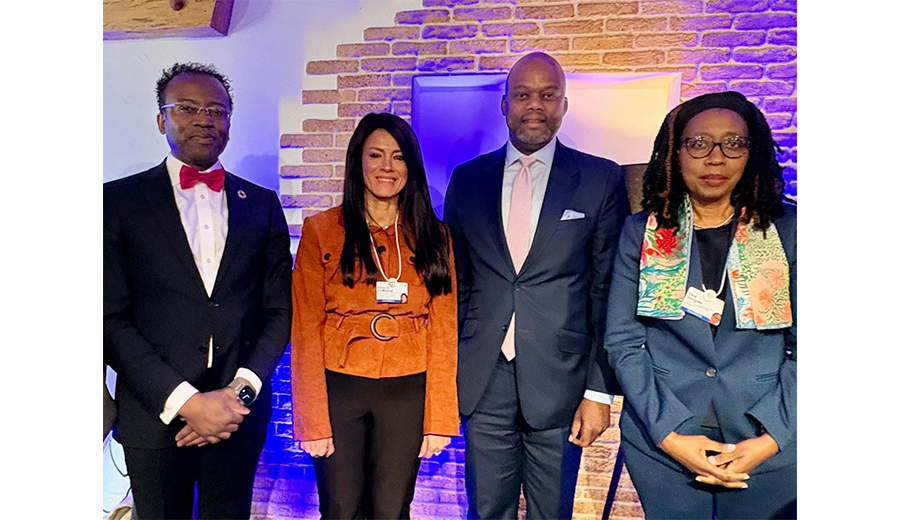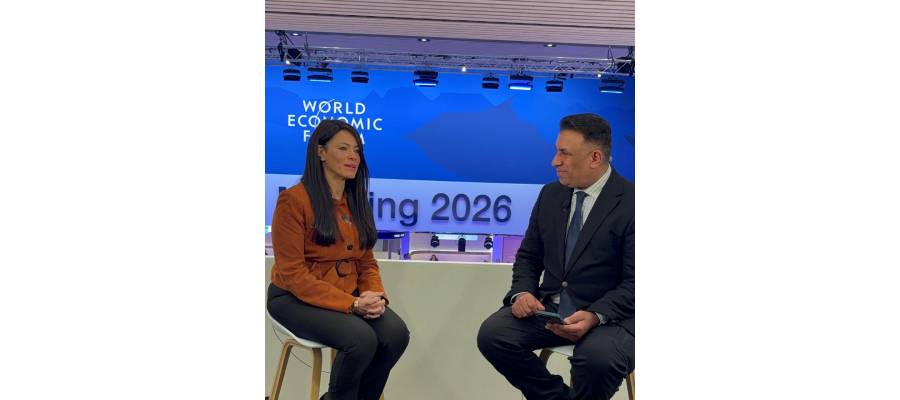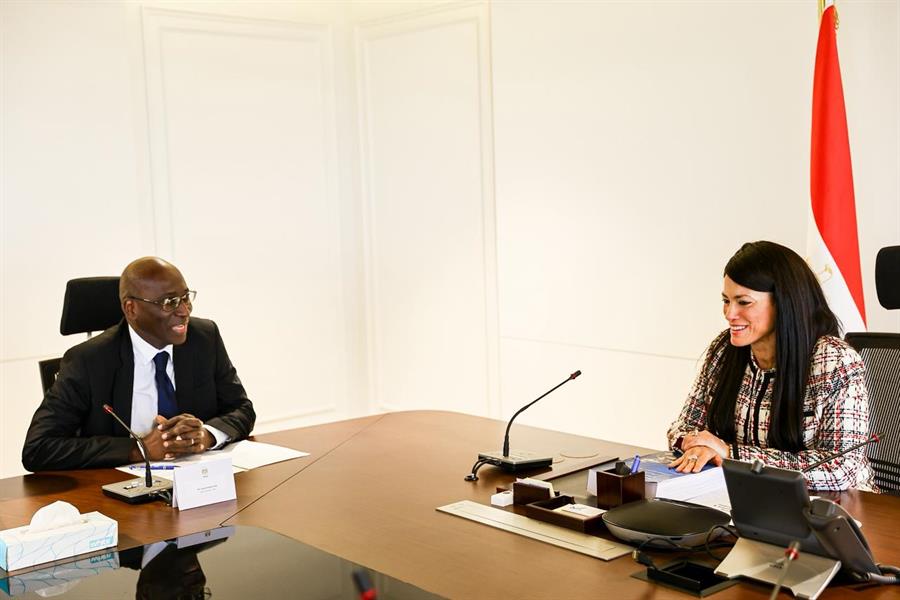
Minister of Planning, Economic Development and International Cooperation participates in a high-level session on mobilizing capital to support the green transition and climate finance
21 January 2026
Within the framework of the World Economic Forum “Davos” meetings…
Minister of Planning, Economic Development and International Cooperation participates in a high-level session on mobilizing capital to support the green transition and climate finance
H.E. Dr. Rania Al-Mashat: We are working with Multilateral Development Banks to expand blended finance instruments for local and foreign private sector investment
The “NWFE” Programme has contributed to increasing the appetite of local and foreign investors for renewable energy projects in Egypt
We have been able to leverage debt swap mechanisms to increase climate investments and implement projects across several development sectors
Activating investment guarantee mechanisms with the European Union and the World Bank to expand financing mechanisms for the private sector
Signing power purchase agreements with the private sector for projects with a capacity of 8.25 GW under the “NWFE” Programme, out of a total target of 10 GW
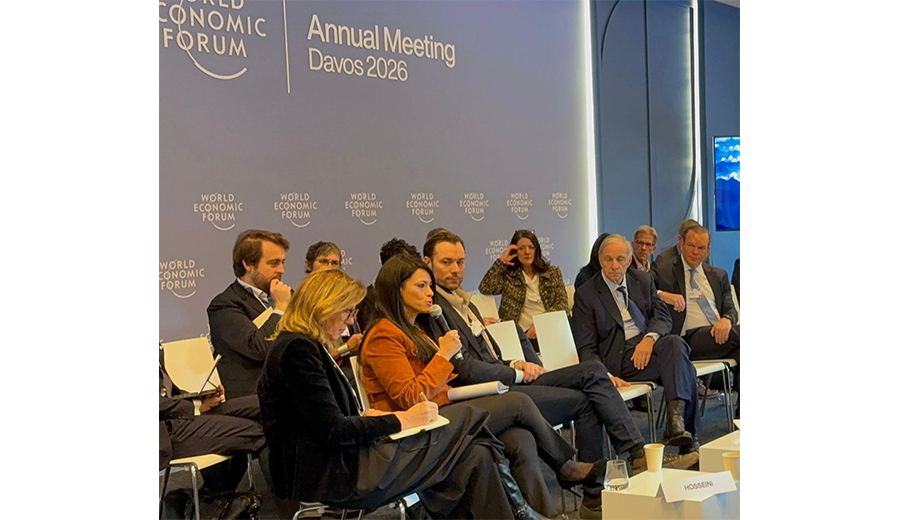
H.E. Dr. Rania Al-Mashat, Minister of Planning, Economic
Development and International Cooperation, participated in a high-level session
on the GAEA Initiative launched by the World Economic Forum, focused on mobilizing
capital to support transitions in climate, nature, and energy. The session
aimed to discuss the mobilization and direction of catalytic capital and
accelerating partnerships between the public and private sectors and
development institutions to support climate action, nature protection, and
accelerate the energy transition.
H.E. Dr. Rania Al-Mashat affirmed that climate finance needs
in emerging markets are enormous, particularly when aligned with global
mitigation and climate adaptation goals, stressing that governments should
focus on “blended finance” models to reduce private sector investment risks in
green projects.
She noted that blended finance mechanisms, including
concessional finance, technical assistance, and risk mitigation instruments,
contribute to reducing risks, enhancing investment viability, and attracting
private capital, which often avoids early-stage or high-risk climate
investments.
H.E. Dr. Rania Al-Mashat reviewed Egypt’s efforts to enhance
climate action through the national platform of the “NWFE” Programme, which has
become a leading platform regionally and globally, and is cited in
international reports as one of the platforms that integrates project design,
implementation, and financing, through coordination among the government,
development partners, international institutions, and the private sector.
She affirmed that the progress achieved in the renewable
energy sector since the launch of the programme has contributed to promoting
the significant opportunities Egypt possesses in renewable energy, and has
strengthened the country’s ability to achieve its target of generating 42% of
energy from renewable sources. She referred to the recent inauguration of the
Obelisk project, one of the largest renewable energy projects.
She explained that the “NWFE” platform, launched in 2022 to
accelerate the implementation of the National Climate Change Strategy 2050 and
the updated Nationally Determined Contributions, and to move from pledges to
actual implementation, relies on blended finance mechanisms by combining
public, private, and concessional financing, alongside technical support and
multi-sector partnerships.
She added that the programme has contributed to increasing
investor appetite in the renewable energy sector, and has succeeded in
mobilizing financing worth USD 4.5 billion for clean energy projects, aimed at
accelerating the implementation of solar and wind energy projects led by the
private sector, with a total implemented capacity of 5.2 GW, while the total
capacity for which power purchase agreements have been signed reached 8.25 GW,
out of a total target of 10 GW under the programme.
She noted that, to date, 1.3 GW of conventional thermal
power plants have been decommissioned out of a total target of 5 GW, in addition
to strengthening electricity grid infrastructure, supported by concessional
financing worth EUR 367 million, to ensure grid readiness for power
transmission and system stability.
On another note, H.E. Dr. Rania Al-Mashat confirmed that
Egypt has been able to leverage debt-for-development swap mechanisms with
bilateral partners, represented by Italy and Germany, to enhance climate
investments, particularly in the energy sector under the “NWFE” Programme, and
to implement projects across several development sectors. She pointed out that
the Ministry is working with the European Union and the World Bank to expand
investment guarantees for the private sector, enabling additional financing
mechanisms.
The session was attended by Chevalier Frederick Tsao, Chairman
of the Tsao Pao Chee Group; Ray Dalio, Founder of the Dalio Family Office; and
Justin Mundy, Head of the Centre for Sustainable Sovereign Debt. The session
was moderated by Sebastian Buckup, Managing Director of the World Economic
Forum, and was opened by André Hoffmann, Vice Chairman of Roche Holding and
Co-Chair of the World Economic Forum.
-

-

-

-
 copied successfully