Dr. Rania Al-Mashat reviews Egypt’s efforts in implementing the first and second phases of the Universal Health Insurance System
07 December 2025
During her participation in the High-Level Forum on Universal Health Coverage in Tokyo, Japan…
Dr. Rania Al-Mashat reviews Egypt’s efforts in implementing the first and second phases of the Universal Health Insurance System
Al-Mashat: Universal health insurance is a strategic objective of the Egyptian State within the human development framework
EGP 48.5 billion in investments for the first and second phases of the Universal Health Insurance System, in addition to concessional financing
Integrated State efforts through the Universal Health Insurance System, “Decent Life,” and health initiatives to improve the quality of services provided to citizens
More than 90 million people have received 250 million health services through presidential initiatives
Strengthening healthcare services improves human development indicators, supports efforts to increase production, and enhances the competitiveness of the economy
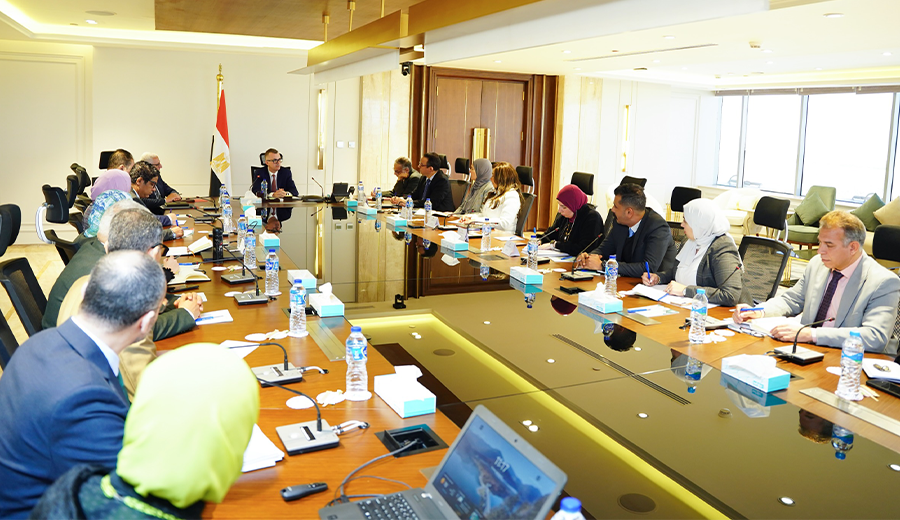
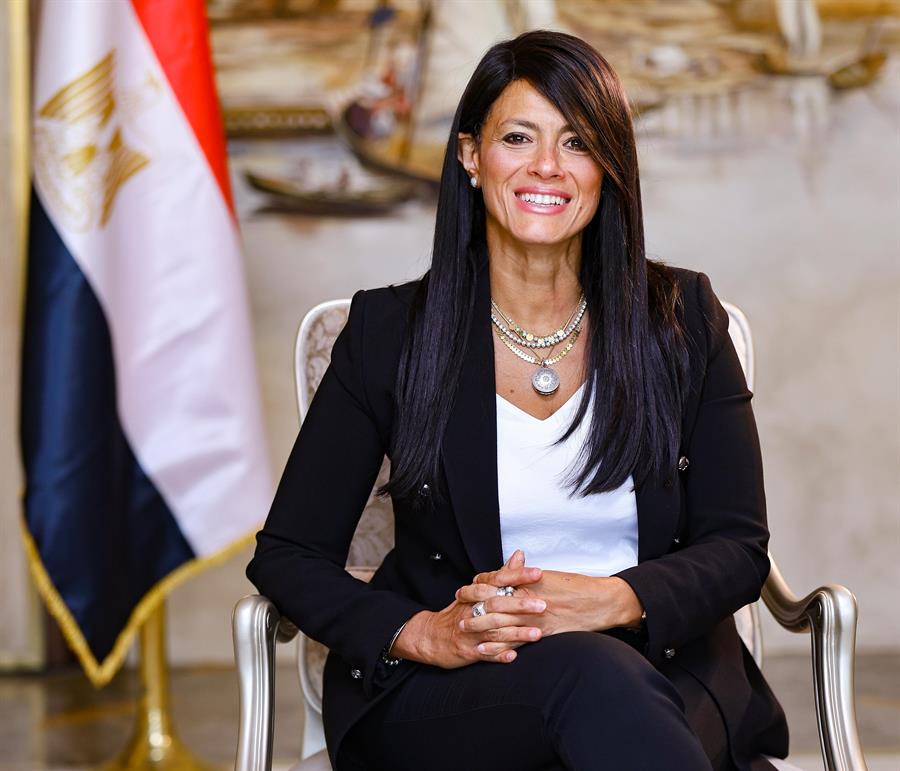
H.E. Dr. Rania Al-Mashat, Minister of Planning, Economic
Development, and International Cooperation, participated in the 2025 High-Level
Forum on Universal Health Coverage, as head of the Egyptian delegation, which
included Dr. Ahmed El-Sobky, Chairman of the Healthcare Authority, and Ms. Mai
Farid, Executive Director of the General Authority for Universal Health
Insurance. The forum is organized by the Government of Japan, in cooperation
with the World Health Organization (WHO) and the World Bank Group, in Tokyo,
Japan, with the participation of senior government officials and international
institutions, including Mr. Ajay Banga, President of the World Bank; Ms. Sanae
Takaichi, Prime Minister of Japan; Dr. Tedros Adhanom Ghebreyesus,
Director-General of the World Health Organization; and Dr. Budi Gunadi Sadikin,
Minister of Health of Indonesia.
The forum witnessed the launch of the Universal Health
Coverage (UHC) Knowledge Hub, an innovative platform established by the
Government of Japan, the World Bank, and the World Health Organization to
strengthen the exchange of experience and knowledge and support national
healthcare policies. It includes Egypt alongside Nigeria, the Philippines,
Kenya, Indonesia, Ghana, Cambodia, and Ethiopia.
In her remarks, H.E. Dr. Rania Al-Mashat stated that this
pivotal event renews global commitment to an issue that lies at the heart of
human development, affirming that Egypt believes that healthcare is a right for
every citizen as well as an economic necessity; it is the foundation upon which
production, job creation, and achieving inclusive and sustainable growth. H.E.
pointed out that the world committed in 2015 to achieving universal health
coverage by 2030, and for Egypt, this was not merely a target but a national
strategy for investing in human capital—the strongest driver of inclusive and
sustainable development.
H.E. noted that Egypt translated this commitment into
concrete steps. Over the past five years, we have worked to increase spending
on the health sector by nearly fourfold, which is a pivotal development because
it allows us to align health objectives with development requirements, enhances
the efficiency of services provided to citizens, and strengthens efforts to
improve quality of life for individuals.
H.E. emphasized that
the strategic objective we are working to achieve is to provide full coverage
under the Universal Health Insurance System for all citizens in Egypt by
2030—an ambitious target requiring advanced technical capabilities, effective
operational systems, in addition to providing sustainable financing that
ensures the system’s continuity and efficiency and achieves full health
coverage throughout the Republic.
H.E. added that
achieving universal health coverage is not limited to expanding service
provision; it also includes strengthening sustainability and achieving value.
In this context, Egypt is implementing a strategic transformation in health
financing to improve the efficiency of public resource use and expand equity in
accessing services. This transformation extends to the governance framework
through the Ministerial Group for Human Development, which ensures a unified
national vision, policy coherence, evidence-based prioritization, targeted
investment allocation for the most vulnerable groups, and accelerated
decision-making. This comprehensive government approach makes universal health
coverage a central pillar of the human capital development agenda and links
health progress with education, skills development, and economic empowerment.
Al-Mashat affirmed that achieving long-term growth depends
primarily on investing in people above all else; investing in human beings is
what enhances productivity and enables individuals to advance and participate
effectively in the economy. It also contributes directly to reducing future
spending on services, particularly in the health sector.
The Minister reviewed the Egyptian experience, noting that
the health sector is one of the State’s essential national priorities, not only
as part of the social protection system but also as a fundamental pillar for
achieving comprehensive development. This approach has been linked to a diverse
set of initiatives and programs, noting the implementation of the Universal
Health Insurance System in cooperation with the World Bank and other
development partners, as well as the launch of several presidential initiatives
that have played a vital role in expanding access to healthcare services
provided to citizens throughout the Republic.
H.E. explained that the first phase of the Universal Health
Insurance System covers six governorates with 5.1 million beneficiaries, with
investments amounting to EGP 28.5 billion from 2018 to 2025 for the
implementation of this phase. The second phase covers five governorates with
12.4 million beneficiaries out of the total population, and investments worth
EGP 20 billion were allocated to develop healthcare facilities in this phase,
in addition to concessional financing of $880 million from the World Bank, the
French Development Agency (AFD), and the Japan International Cooperation Agency
(JICA) to support the Universal Health Insurance System.
She also praised the role of the International Finance
Corporation (IFC) and the French Development Agency (AFD) in supporting
private-sector engagement, policy reforms, and institutional capacity building,
efforts that enhance the resilience and efficiency of the healthcare system.
She continued: “As for the presidential health initiatives,
their impact has reached nearly 90 million citizens through the provision of
more than 250 million health services, including early detection campaigns,
screenings for non-communicable diseases, and follow-up and treatment
programs.”
Regarding the “Decent Life” Initiative, more than 2,000
primary healthcare units have been established or upgraded, significantly
improving the quality of healthcare services in rural areas and relieving
pressure on central and general hospitals. This reflects not only the scale of
the efforts undertaken but also the clear integration among the various
initiatives operating under a unified vision.
H.E. also emphasized that when measuring public health
expenditure, focus should not be limited to what is allocated to the Universal
Health Insurance System, as spending on water, sanitation, infrastructure, and
other social services constitutes an important component of the overall picture
and contributes indirectly to improving public health and reducing disease
rates.
The Minister highlighted Egypt’s experience in eliminating
Hepatitis C, noting that the World Health Organization declared Egypt free of
the disease. This achievement resulted from extensive vaccination campaigns and
the domestic production of the vaccine by private-sector companies,
underscoring the essential role played by all parties in the system:
government, private sector, and international partners.
H.E. affirmed that the government’s role lies in
facilitation and empowerment by ensuring optimal utilization of each partner’s
strengths while providing a common platform that enables all parties to work
together effectively.
The Minister of Planning, Economic Development, and International Cooperation concluded her remarks by reaffirming that investing in citizens, protecting the most vulnerable families, empowering youth, strengthening the healthcare system, and expanding productive employment opportunities form the foundation for building a more resilient, capable, and competitive economy.
-

-

-

-
 copied successfully