Minister of Planning, Economic Development and International Cooperation witnesses trading session to mark Egytrans’ acquisition of NOSCO and the reduction of the National Investment Bank’s stake
04 December 2025
In the presence of the Deputy Prime Minister for Industrial Development, the Ministers of Investment and Supply, the Chairman of the Financial Regulatory Authority, and the Chairman of the Egyptian Exchange
Minister of Planning, Economic Development and International Cooperation witnesses trading session to mark Egytrans’ acquisition of NOSCO and the reduction of the National Investment Bank’s stake
Al-Mashat: Transport and logistics are among the sectors contributing most to growth, supported by major developments in the sector since 2014.
Infrastructure and logistics improve Egypt’s ranking in international indicators and boost the competitiveness of the Egyptian economy.
The Egyptian Exchange is a cornerstone for enhancing the role of the private sector and supporting the state’s efforts to achieve inclusive, sustainable economic growth.
An increased share of private-sector investment is a strong indicator of restored private-sector confidence and the effectiveness of implemented reforms.
I thank the Managing Director of the National Investment Bank and his team for their continuous efforts to maximize returns on the bank’s assets.
Reducing the National Investment Bank’s stake in the new consortium to 18.3% reflects efforts to make room for the private sector.
The government is committed to continuing the development and restructuring plan of the National Investment Bank so it can play a larger role in supporting economic and social development plans.
Financial entanglements between the bank and the Postal Authority are being settled to strengthen the bank’s role in managing and governing public investments.
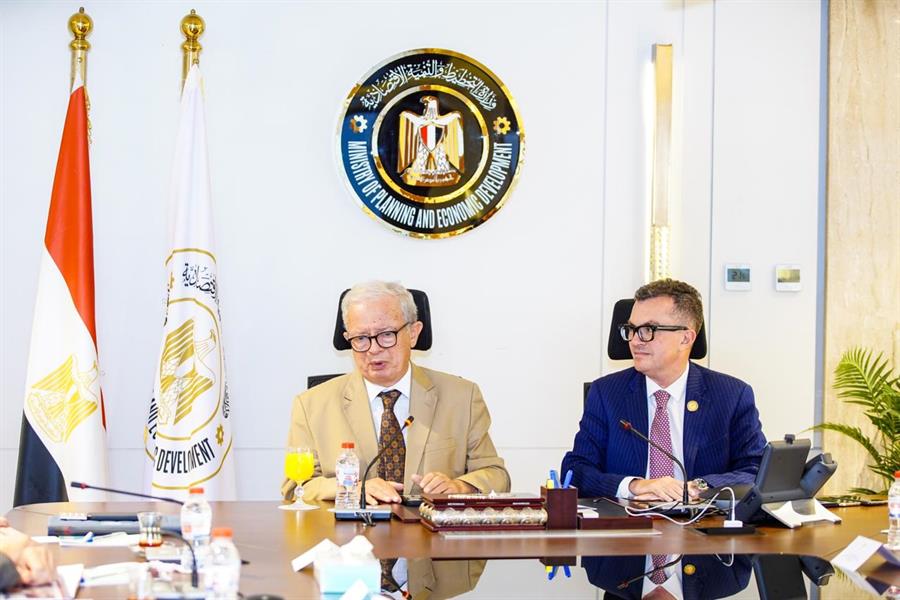
H.E. Dr. Rania Al-Mashat, Minister of
Planning, Economic Development and International Cooperation and Chairman of
the National Investment Bank, participated in ringing the opening bell at the
historic Egyptian Exchange headquarters in downtown Cairo, celebrating the
Egyptian Transport Services Company (Egytrans)’s acquisition of the National
Company for Transport and Offshore Services (NOSCO) and the reduction of the
National Investment Bank’s stake in Egytrans from 25.5% to 18.3%.
The event was also attended by Lt. Gen.
Eng. Kamel El-Wazir, Deputy Prime Minister for Industrial Development and
Minister of Industry and Transport; Eng. Hassan Al-Khatib, Minister of
Investment and International Trade; Dr. Sherif Farouk, Minister of Supply and
Internal Trade; Dr. Mohamed Farid, Chairman of the Financial Regulatory
Authority; Dr. Islam Azzam, Chairman of the Egyptian Exchange; Mr. Ashraf Negm,
Managing Director of the National Investment Bank; Dr. Hashem El-Sayed,
Assistant to the Prime Minister and CEO of the State-Owned Companies Unit; and
Eng. Maged Shawky, Chairman of Egytrans.
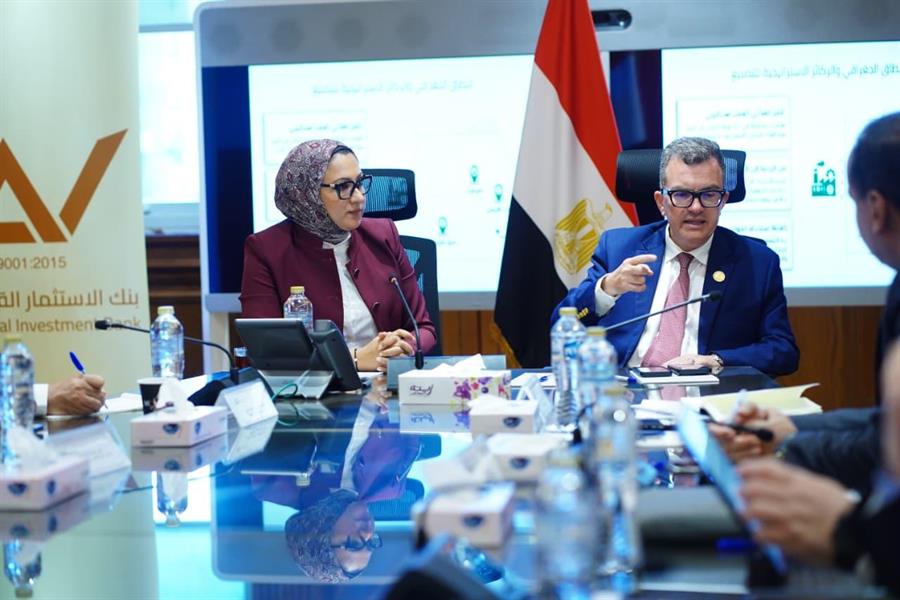
In her remarks at the event, Minister
Al-Mashat said that today’s milestone is more than an investment transaction or
acquisition: it reflects substantial efforts by multiple entities to implement
structural reforms that stimulate the investment climate and improve the
business environment. She noted that these developments mirror the Egyptian
state’s extensive work to develop the transport, logistics and storage sector
since 2014, which has improved Egypt’s competitiveness indicators and opened
opportunities for the private sector to expand its activities and increase the
transport and storage sector’s contribution to GDP.
Dr. Al-Mashat stated that these
developments reflect a shift in the Egyptian economy toward a model based on
productivity, exports and private-sector empowerment to drive economic
development and sustainable growth. She added that GDP growth indicators show a
significant rise in private investment relative to total investment,
demonstrating private-sector confidence and the effectiveness of the reforms
implemented.
She also said the move is fully aligned
with the successive measures the government is implementing under the National
Program for Structural Reforms, one of whose main pillars is improving the
investment climate and business environment. Whether reforms are implemented at
the National Investment Bank or in the capital market, they pursue the state’s
objective of empowering the private sector and redefining the role of the state
in the economy.
Al-Mashat noted the Egyptian Exchange as
a major tool to strengthen private-sector participation, stressing that the government’s
public-offering program is a top priority as it helps deepen the market,
attract new investment and create promising opportunities for companies.
She added that the reduction of the
National Investment Bank’s stake is also part of the state’s efforts to
restructure the bank and maximize its investment role. Since its establishment
in 1980, the bank has been and remains one of the state’s key economic arms for
financing projects included in the development plan and following up on their
field implementation, which enhances the efficiency of public spending and
addresses obstacles that may affect project delivery. She thanked Mr. Ashraf
Negm, the bank’s Managing Director, and his team for their continued efforts to
maximize returns on the bank’s assets and investments.
The minister noted that the bank has made
great strides in recent years both in institutional development and in settling
financial positions, and reiterated the government’s commitment to continue the
bank’s development and restructuring to enable it to play a greater role in
supporting economic and social development plans.
Regarding the financial entanglements
between the National Investment Bank and national entities, she said the
settlement with the National Bank of Egypt has been completed and procedures to
settle entanglements with the National Postal Authority are underway, which
will help strengthen the bank’s role in managing and governing public
investments.
She concluded by saying that the current
stage requires further joint effort and work to achieve the government’s
targets, particularly in enhancing Egypt’s attractiveness to investment and
supporting competitiveness.
Notably, GDP indicators for the first
quarter of the current fiscal year showed private investment rose to account
for 66% of total investment. The Purchasing Managers’ Index (PMI) in Egypt also
rose to 51.1 points in November 2025—the highest level since October
2020—reflecting the non-oil private sector’s strongest improvement in the
business environment, supported by stronger demand, lower input costs and
growth in manufacturing, construction and services sectors.
At the close of the event, Dr. Islam
Azzam, Executive Chairman of the Egyptian Exchange, honored Dr. Rania Al-Mashat
in recognition of her efforts in restructuring the National Investment Bank.
-

-

-

-
 copied successfully